Using last year’s herbs before the new growing season begins
By February, many of us have jars of herbs tucked away from last summer’s garden. This is the perfect time to pull them out, take stock, and use them intentionally before the new growing season begins. Herbs are meant to be used — and when they’ve been stored properly, even dried herbs can still bring wonderful flavor into your kitchen.
Late winter is also a quieter season in the kitchen, which makes it a great time to slow down and turn what you grew into simple, everyday staples you’ll actually reach for.
How to Tell If Dried Herbs Are Still Good
Before using any dried herbs, take a moment to check them.
- Smell: Crush a small amount between your fingers. If the aroma is faint or dusty, the flavor will be weak.
- Color: Herbs that have held their color tend to hold their flavor. Very dull or gray herbs are usually past their prime.
- Texture: Dried herbs should crumble easily, but shouldn’t feel stale or powdery.
If your herbs still smell good, they’re worth using — especially for infusions, where time helps draw out flavor.
Best Ways to Use Up Herbs
Late winter is ideal for infusions. They’re simple, practical, and turn small amounts of herbs into kitchen staples that feel useful instead of forgotten.
Before starting any infusion:
- Make sure all jars are clean and sanitized
- Running jars through the dishwasher works well
Herb-Infused Vinegars
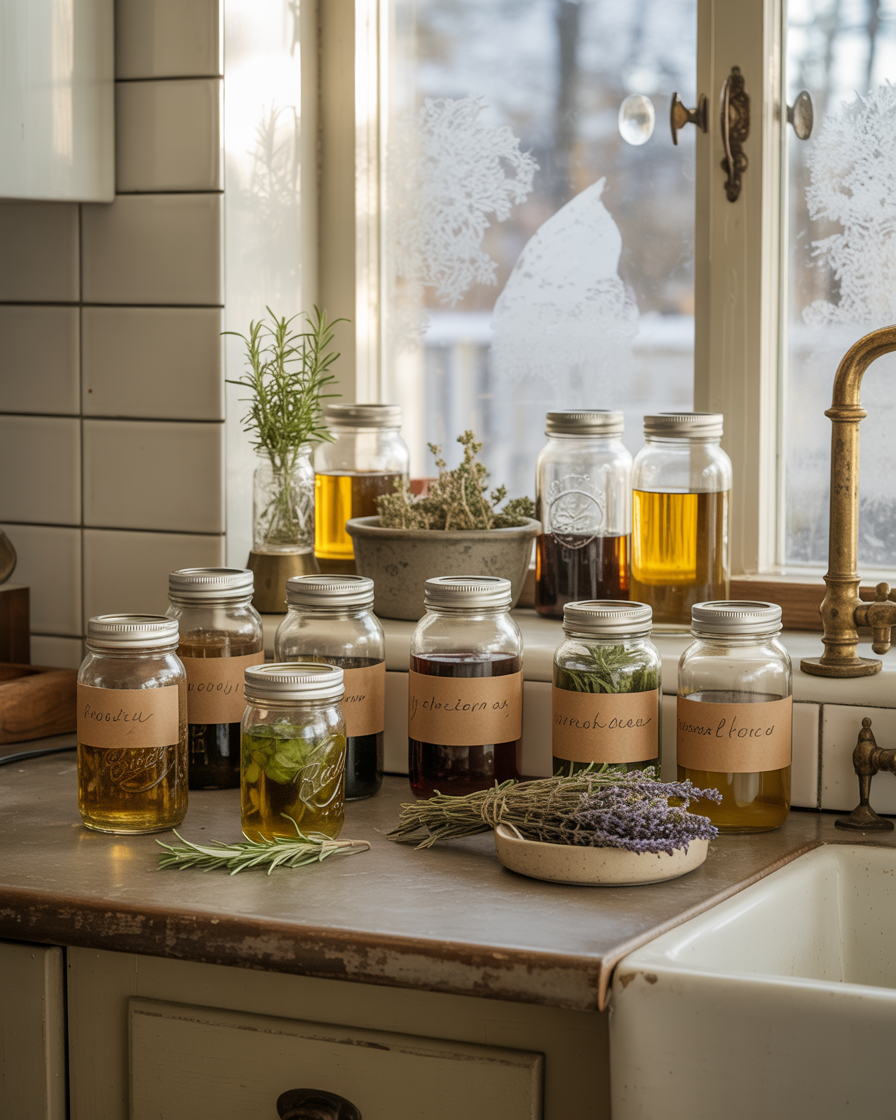
Herb-infused vinegars are one of the easiest and most reliable ways to use both dried and fresh herbs. They store well, develop flavor over time, and are incredibly versatile.
Red Wine Vinegar with Dried Italian Herbs
This is one of Michelle’s go-to recipes and a great way to use up dried herb blends.
Ingredients
Dried Italian herb blend
Red wine vinegar
How to Use It
Use straight as a sub sandwich sauce
Mix with mayonnaise for an easy sandwich spread
Herb-Infused White Wine Vinegar
Ingredients
Dried basil, oregano, or thyme
White wine vinegar
How to Use It
Pasta salads
Simple vinaigrettes
Drizzled over roasted vegetables
Common vinegars used for infusions include rice vinegar, sherry vinegar, champagne vinegar, and white or red wine vinegar.
Herb-Infused Oils – Crock Pot Method
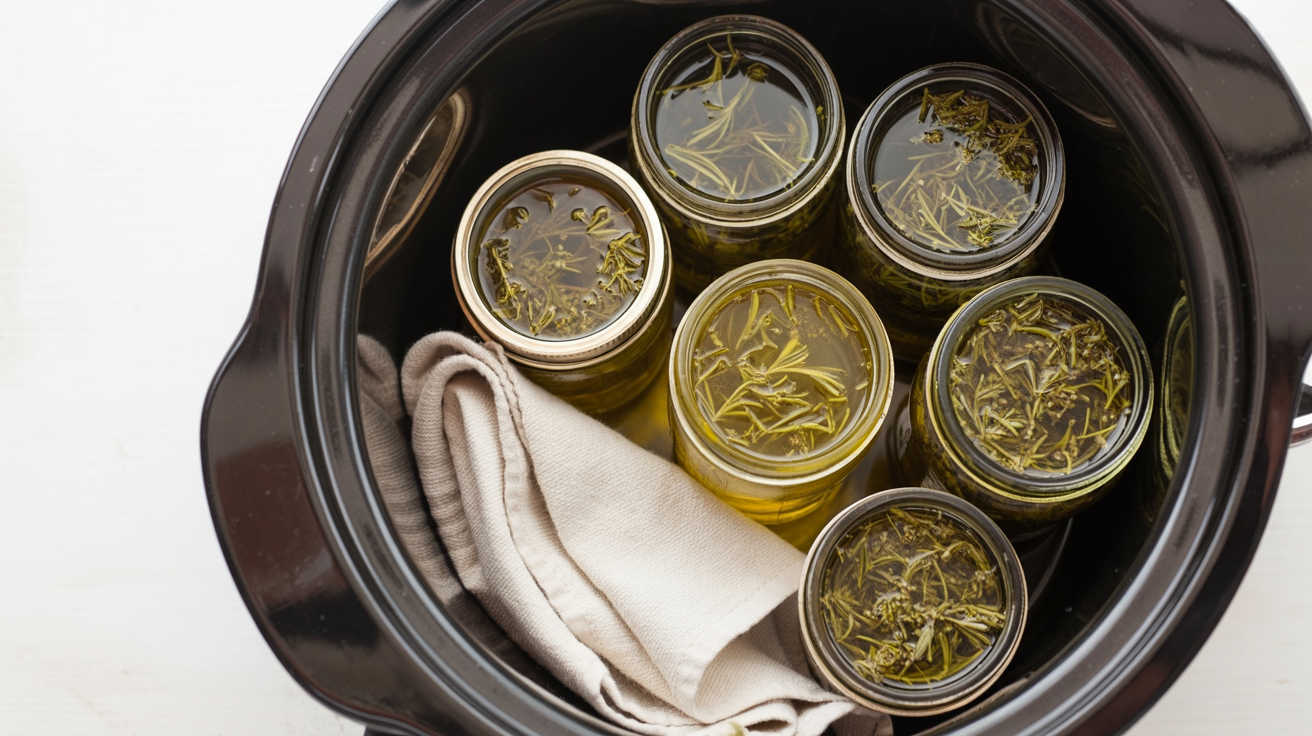
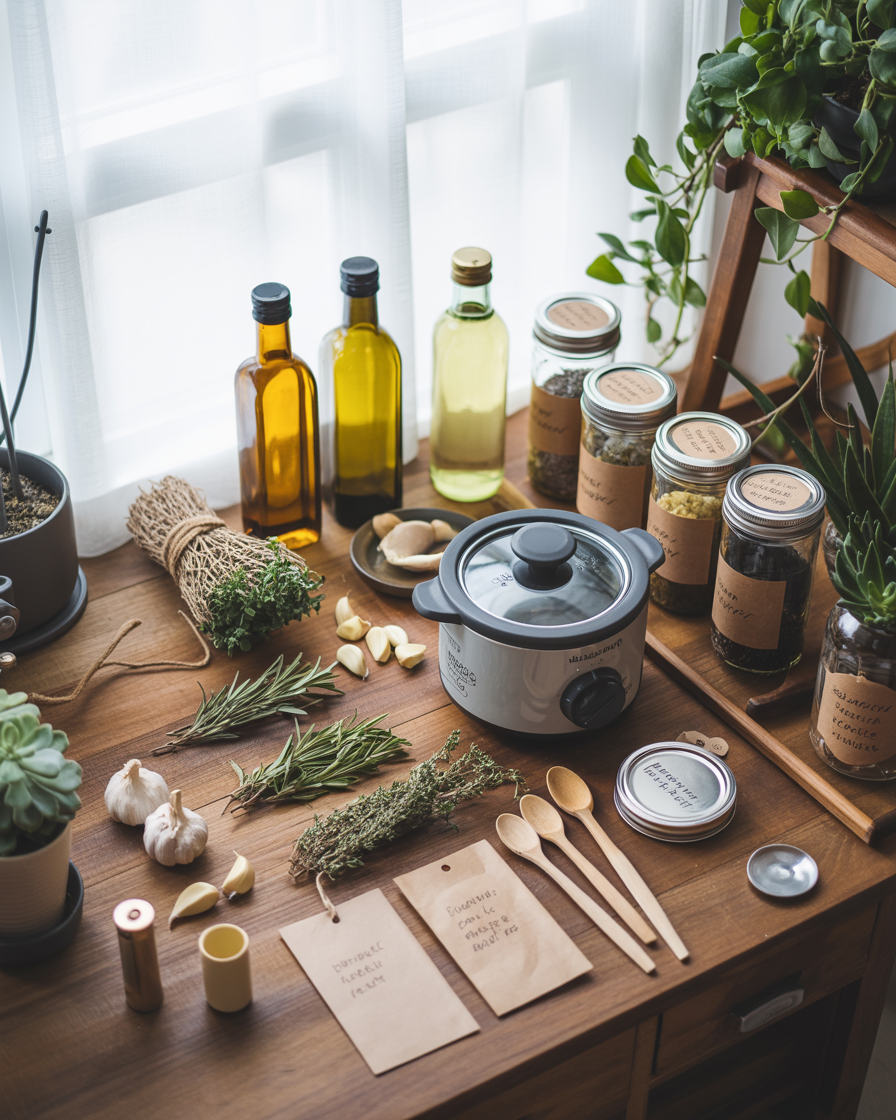
This is the method Michelle uses most often because it’s simple, gentle, and very forgiving. The goal is low, steady heat that draws flavor out of the herbs without cooking or scorching them.
Important Notes Before You Start
- Use dried herbs only for oils stored at room temperature
- Fresh herbs may be frozen in oil but should not be stored at room temperature
- Always use clean, sanitized jars and tools
Choosing the Right Oil
- Avocado oil: Best for roasting vegetables and cooking over 320 degrees due to its higher smoke point
- Olive oil: Best for lower-heat cooking and finishing dishes
Storage
- Room temperature, cool dark place: 4–6 months
- Frozen fresh herbs in oil: up to 4–6 months
This simple herb oil is perfect for roasting vegetables, tossing with potatoes, or drizzling over finished dishes.
Compound Butters
Compound butters are one of the easiest and most useful ways to preserve herbs. A small amount of herbs goes a long way, and having butter ready in the fridge or freezer makes everyday meals feel special without extra effort.
Basic Compound Butter Method
- Start with softened, unsalted butter
- Finely chop herbs so they mix evenly
- Add herbs, seasonings, and extras
- Mix until well combined
- Shape into a log with parchment paper or store in a covered container
- Chill until firm, then slice as needed
Storage
- Refrigerator: up to 2 weeks
- Freezer: 60–90 days
Cranberry Herb Butter
½ pound unsalted butter, softened
½ tablespoon chopped fresh parsley
½ teaspoon chopped fresh basil
⅛ teaspoon sea salt
¼ teaspoon orange peel
1 heaping tablespoon dried cranberries, chopped
Best Uses
Toast, roasted vegetables, chicken, and holiday breads
Everything Herb Butter
1 pound unsalted butter, softened
1 cup total fresh chopped herbs
Basil, tarragon, thyme, chives
Parsley, oregano, rosemary
1 teaspoon sea salt
1 teaspoon pepper
Best Uses
Steaks, grilled vegetables, pasta, and crusty bread
If you enjoy learning by watching, Michelle walks through these exact oil, butter, and vinegar methods step by step in her video. It’s a relaxed, practical look at turning garden herbs into things you’ll actually use.
Here’s what to do with all those yummy herbs – Infusing Oils, Butters, and Vinegars
Using up your herbs now clears the way for what’s ahead and keeps your garden connected to your kitchen year-round. If you need jars, supplies, or a little inspiration, swing by and see us. We’re always happy to help you make the most of what you grow.
The Landscape Connection
4472 S. Mulford Rd.
Rockford, IL 61109
(815) 874-8733
www.TheLandscapeConnection.net