Pruning in March – What You Should (and Shouldn’t) Cut in Zone 5
Understanding old wood vs. new wood before you make your first spring cut.
Pruning makes a lot of homeowners nervous.
Will I kill it?
Am I cutting too much?
Is this even the right time?
Here’s the good news: most of the time, pruning incorrectly won’t kill your shrub. You might sacrifice a season of blooms. You might reshape it in a way you didn’t intend. But plants are resilient.
Before you make a single cut, ask yourself one important question:
Why am I pruning this?
If you don’t have a reason, you probably don’t need to do it.
Good Reasons to Prune
To improve stem color, like red twig dogwood
To encourage stronger flowering
To promote a second bloom on reblooming shrubs
To rejuvenate an overgrown plant
To maintain a hedge or topiary shape
To remove dead or diseased wood
If none of those apply, consider leaving it alone. Many shrubs perform beautifully with very little intervention.
Old Wood vs. New Wood – The Most Important Distinction
In Zone 5, March pruning success comes down to understanding how your shrub blooms.
Shrubs That Bloom on Old Wood
These form flower buds on last year’s growth.
Examples:
Lilacs
Forsythia
Weigela
Magnolia
Azalea
Mock orange
Ninebark
Quince
Elderberry
Some spirea
If you prune these in March, you’re likely cutting off this year’s flowers.
The rule of thumb:
Prune old-wood bloomers immediately after they finish flowering.
Generally, the earlier a plant blooms in spring, the more likely it blooms on old wood.
Shrubs That Bloom on New Wood
These flower on growth produced this season.
These are safe to prune in March in Zone 5:
Panicle hydrangeas like Limelight
Smooth hydrangeas like Annabelle
Butterfly bush
Rose of Sharon
Bluebeard
Potentilla
Red twig dogwood
Deutzia
Roses
These benefit from a spring trim. Pruning actually promotes vigorous new growth and stronger blooms.
How Much Should You Cut?
If you’re unsure, follow the one-third rule.
You have two options:
- Cut the entire plant back by about one-third across the top.
- Remove one-third of the stems selectively by cutting older canes down to the base.
Both methods reduce size without shocking the plant.
When cutting:
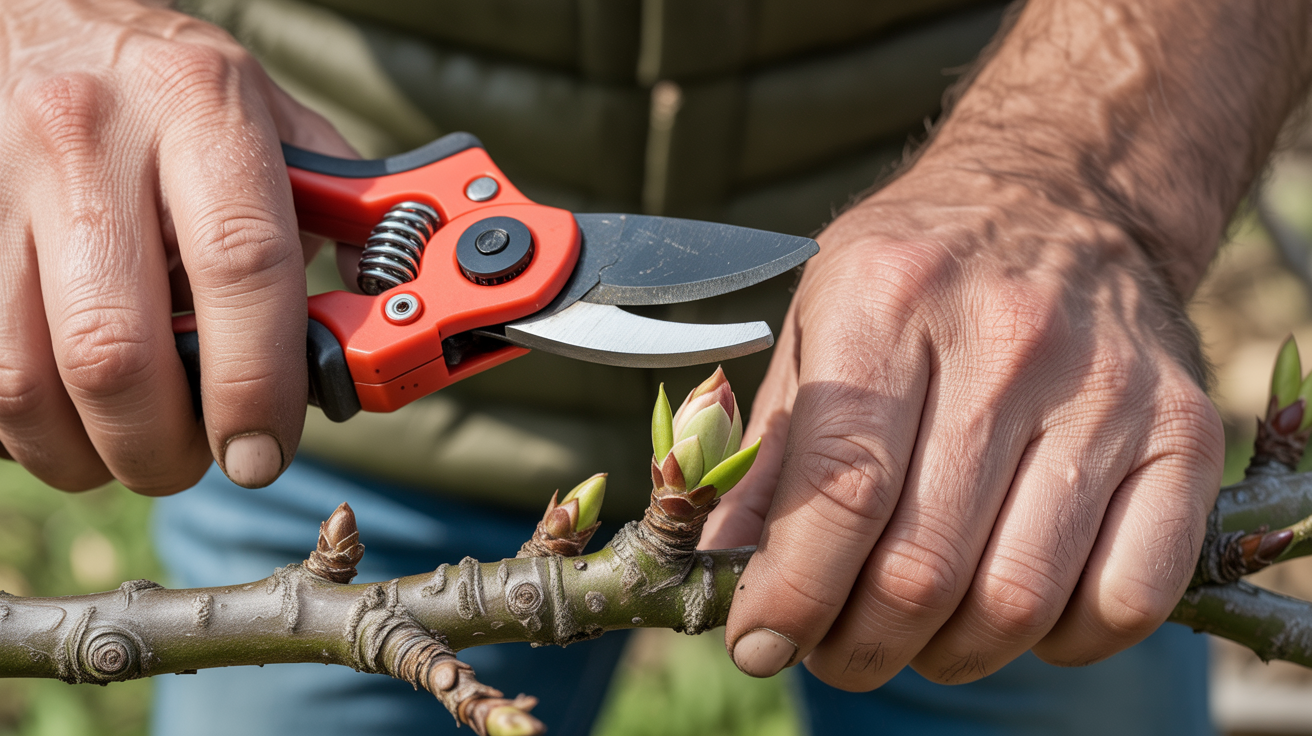
• Use sharp bypass pruners
• Make clean, straight cuts
• Cut just above a bud
• Avoid cutting into bare wood unless removing a branch entirely
The larger the bud, the more vigorous the growth above it will be.
Timing Matters in Zone 5
In Northern Illinois, late winter and early March can still surprise us.
Established shrubs usually handle pruning just fine, but it’s wise to avoid pruning right before an extended stretch of extreme cold.
Michelle typically waits until buds are beginning to swell so she can see where new growth will emerge.
What About Evergreens?
Evergreens like boxwood and arborvitae are best pruned after new growth flushes out in spring — not in early March.
And remember:
Dead or diseased wood can be removed anytime.
Sometimes the Best Move Is No Move
Some shrubs perform better with little to no pruning at all.
Oakleaf hydrangeas
Mountain hydrangeas
Rhododendrons
Viburnums
Winterberry holly
If you’re growing viburnum or winterberry for the berries, pruning at the wrong time means you lose them.
Not everything needs to be “fixed.”
Pruning builds confidence. It’s one of those early spring tasks that makes you feel like the season has officially begun.
And even if you make a mistake? It will probably grow back.
If you’d like to see real examples, step-by-step demonstrations, and how to approach specific shrubs here in Northern Illinois, watch the full pruning video here 👉
When To Prune Shrubs in Winter.
The Landscape Connection
4472 S. Mulford Rd.
Rockford, IL 61109
(815) 874-8733
www.TheLandscapeConnection.net