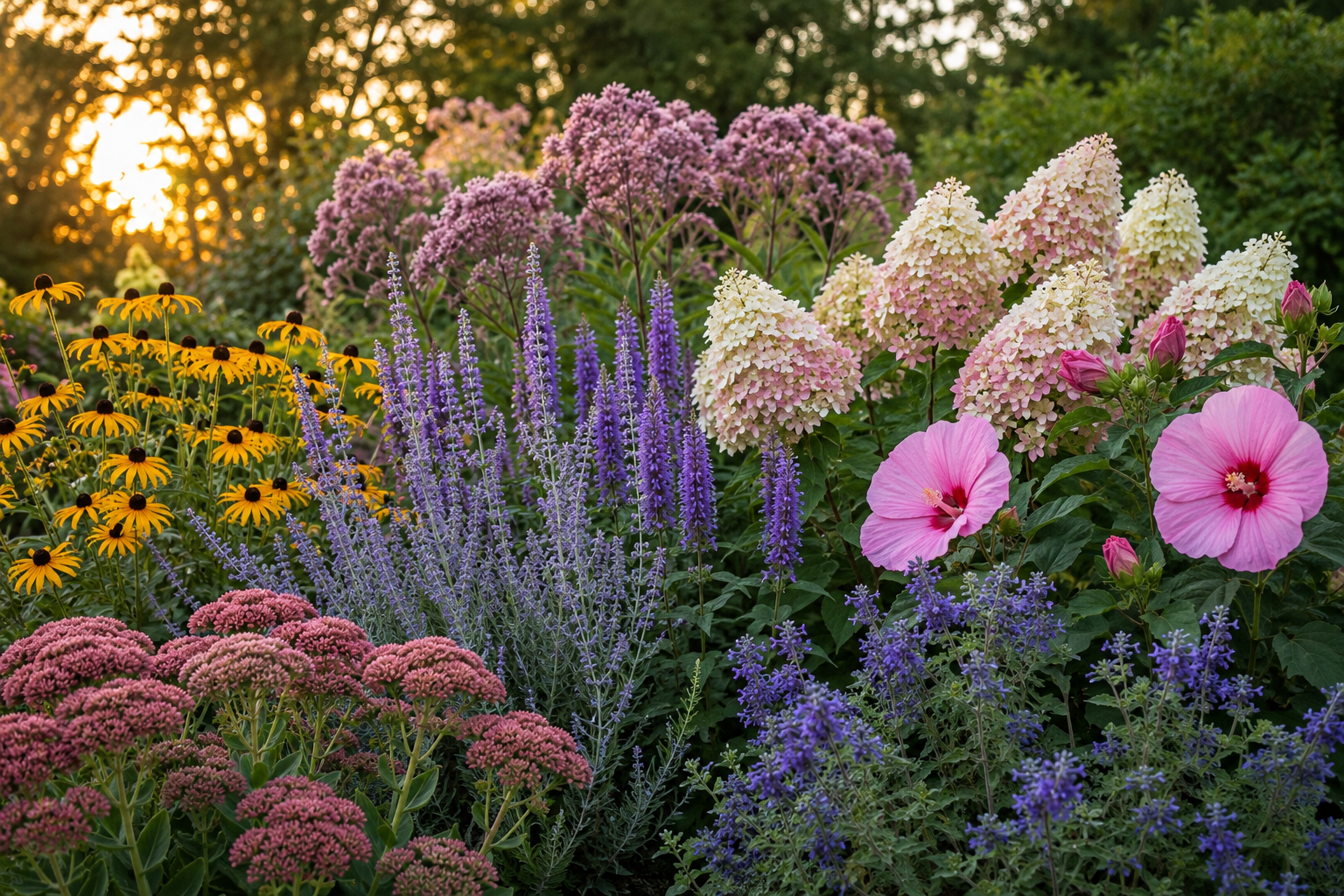
By September, the garden has had all summer to reveal its problem spots.
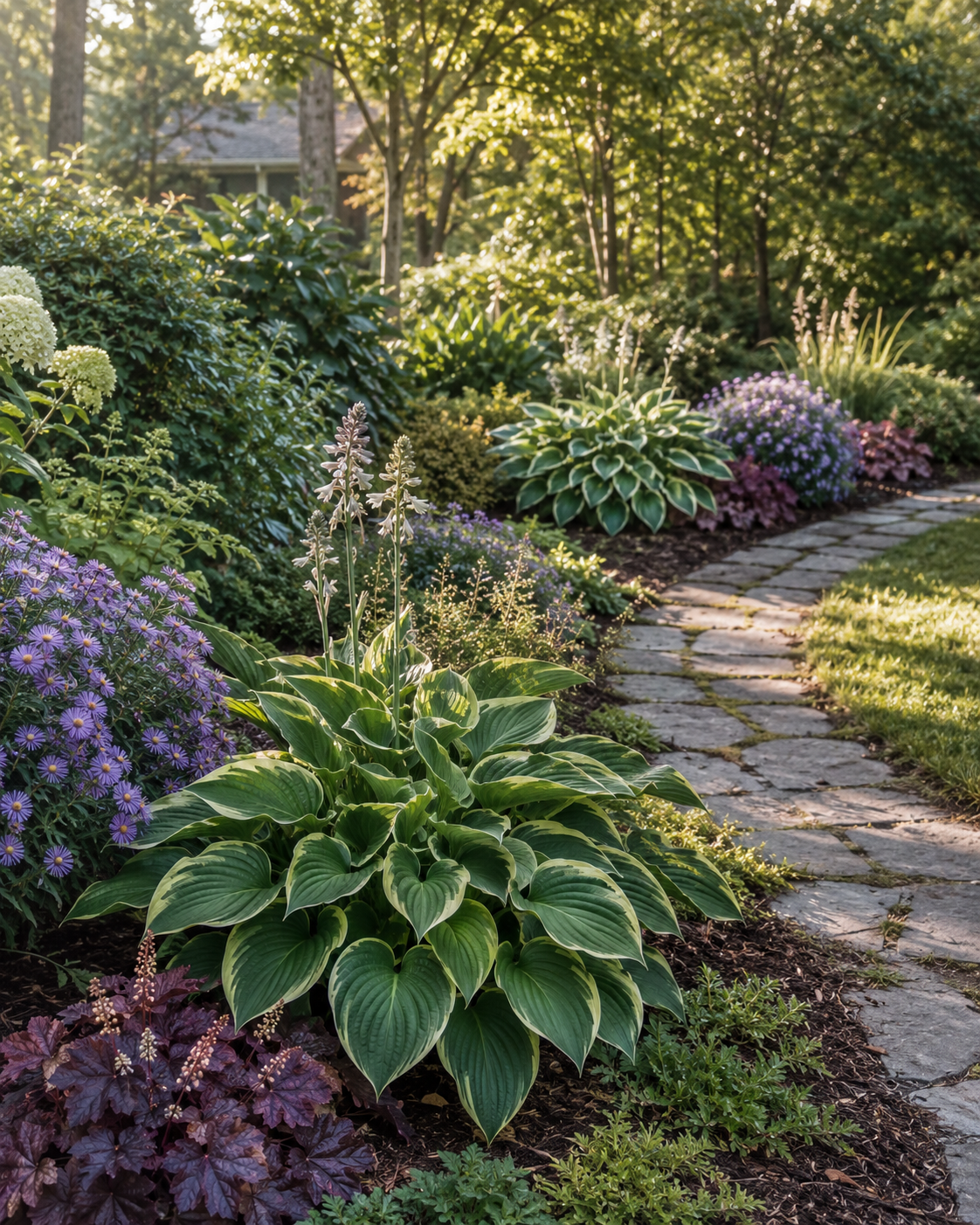
Maybe a hosta has outgrown the walkway. A sun-loving perennial is leaning toward the only patch of light it can find. One plant is crowding its neighbors, while another seems to have disappeared into a space that’s too large.
The good news? Gardeners don’t always have to wait until spring to make changes.
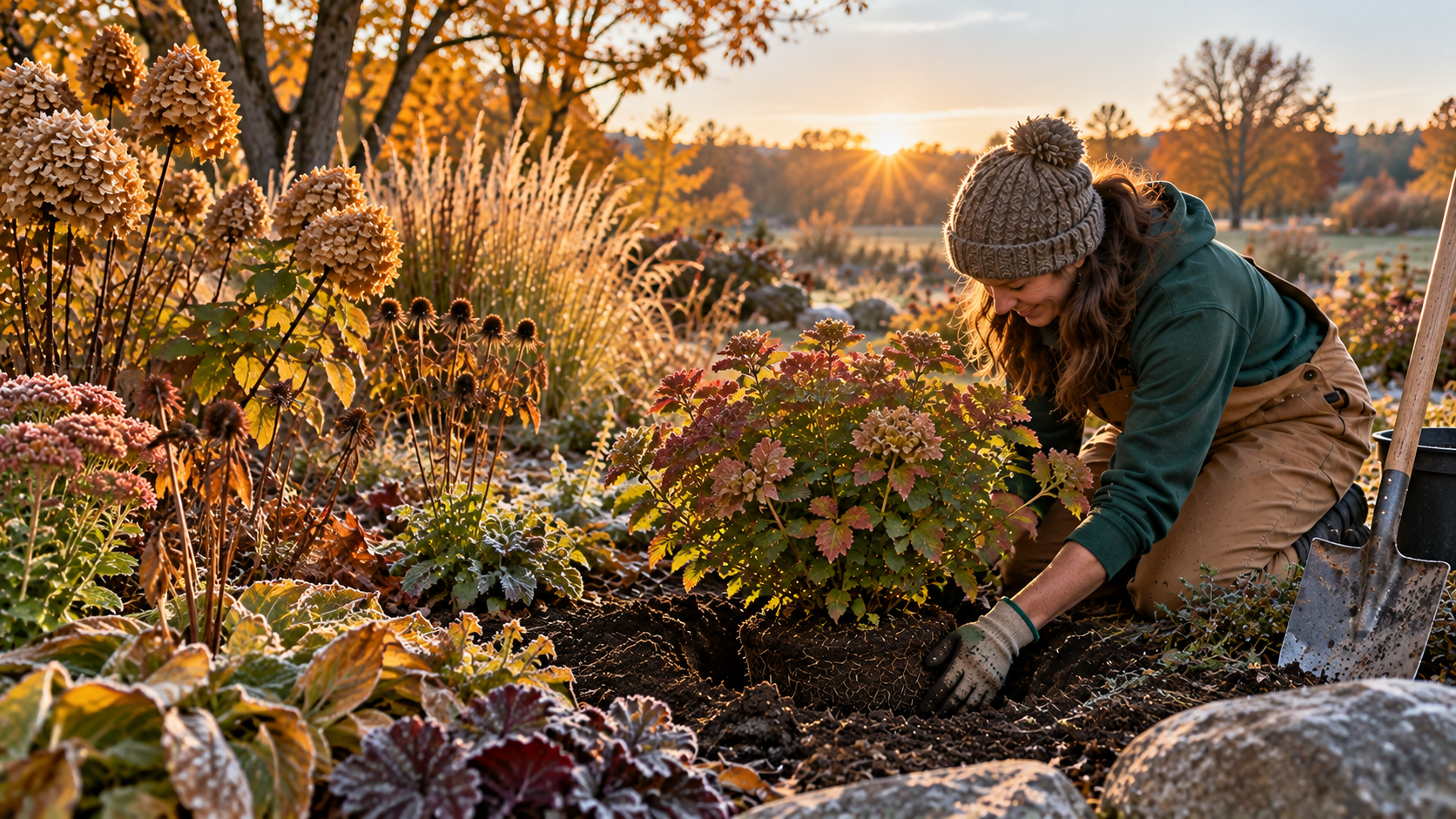
Early fall can be a great time to divide overcrowded perennials and move plants to better locations. Cooler air puts less stress on the foliage, while warm soil gives the roots time to begin settling in before winter.
Dividing or Transplanting: What’s the Difference?
Dividing and transplanting often happen at the same time, but they aren’t quite the same thing.
Transplanting means digging up a plant and moving it to a new location.
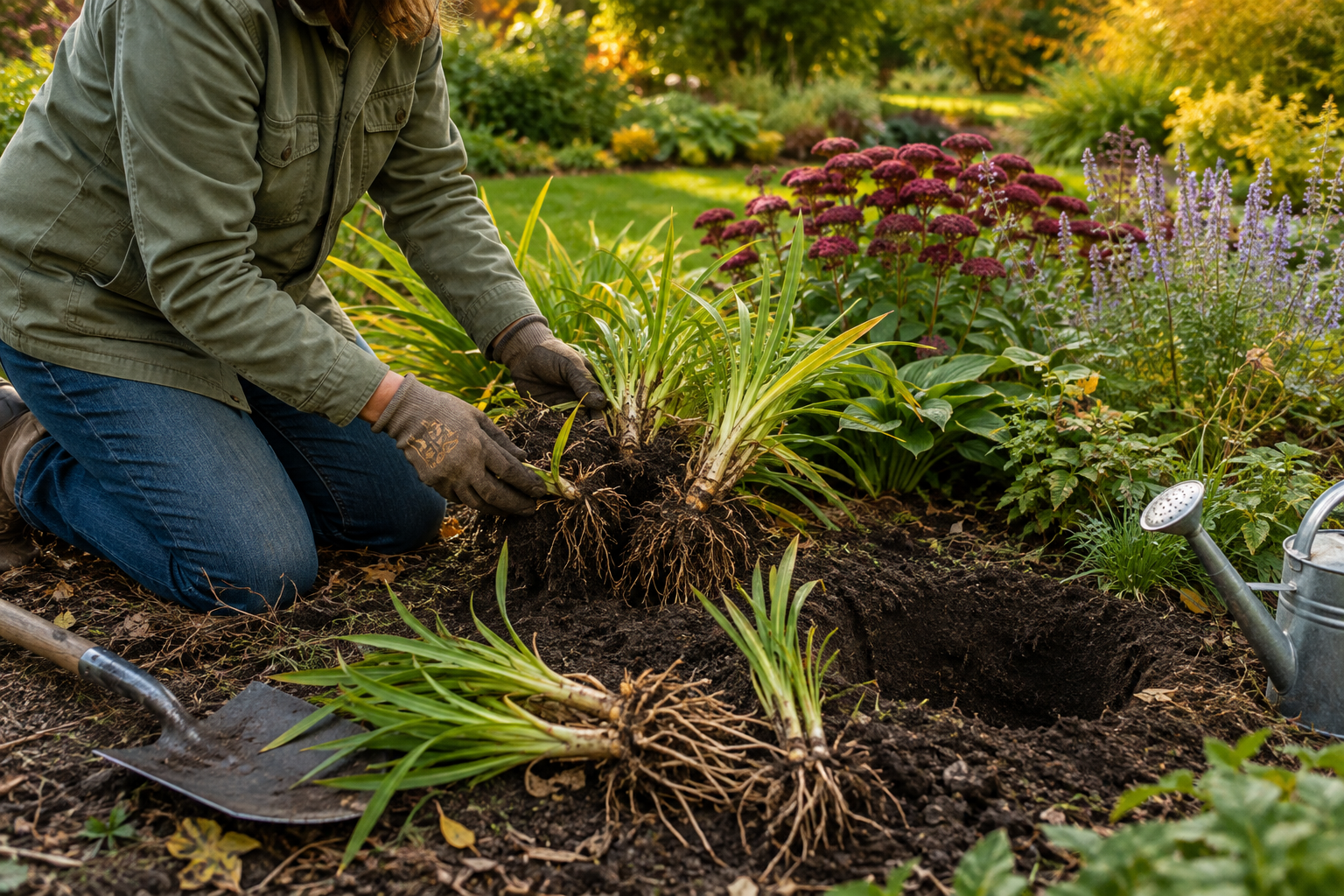
Dividing means digging up an established plant and separating it into several smaller sections. One section can return to the original spot while the others move to new areas of the garden—or get shared with another gardener.
A plant doesn’t need to be divided every time it’s moved. If it’s still a healthy size, the entire root ball may simply be relocated.
How to Know When a Perennial Needs Attention
Is Fall the Right Time?
In Zone 5, early fall usually offers a useful window for dividing and transplanting many hardy perennials. The goal is to finish at least four to six weeks before the ground freezes so the roots have time to begin establishing.
A good general rule is to divide spring- and early-summer-blooming perennials in fall. Plants that bloom in late summer or fall are often better divided in spring so they aren’t disturbed while flowering or preparing for winter.
Hostas, daylilies, peonies, bee balm and many other hardy perennials may be moved in early fall. However, the best timing varies by plant.
Ornamental grasses are usually easier to divide in spring in Northern Illinois. Newly divided grasses can be slow to establish when the soil is cooling, especially if they’re moved late in the season.
If a plant is already stressed, diseased or struggling through drought, moving it may add more stress. It may be better to correct the immediate problem and wait for a better planting window.
Before Digging, Choose the New Location
A move will only help if the new location better matches what the plant needs.
Before digging, check:
- Sunlight throughout the day
- Soil drainage
- Available space at maturity
- Moisture levels
- Nearby plants
- The plant’s height, bloom time and growth habit
Prepare the new hole before lifting the plant. That way, the roots spend less time out of the ground.
Gardeners can also watch how these decisions happen in a real landscape. During a
late-summer workday in Michelle’s garden, several established perennials are moved to better locations while new varieties fill open spaces. It’s a good example of how one simple garden task can quickly turn into several small improvements.
How to Divide and Transplant Perennials
1. Water Before Digging
If the soil is dry, water the plant a day before moving it. Slightly moist soil is easier to work with and helps the root ball stay together.
2. Cut Back Some Foliage if Needed
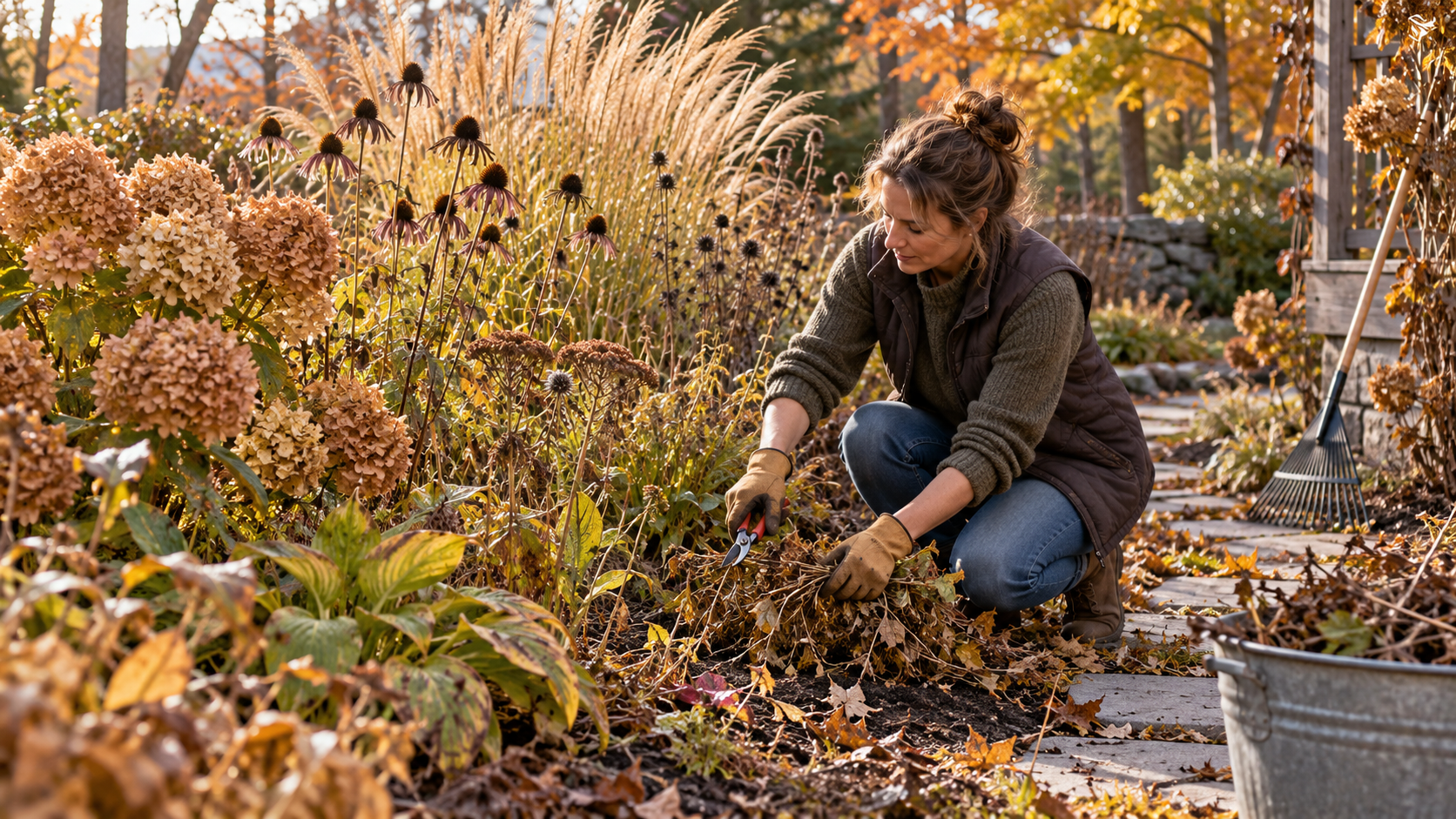
Large or floppy plants can be trimmed back before moving. Removing some top growth makes the plant easier to handle and reduces the amount of moisture lost through the leaves.
There’s no need to cut every plant to the ground. The amount removed depends on the plant, its condition and the time of year.
3. Dig Around the Root Ball
Use a sharp spade to dig around the plant, leaving enough room to preserve a healthy section of roots. Work beneath the root ball and lift it carefully.
Trying to pull the plant out by its stems can damage both the crown and the roots.
4. Separate the Plant
Some perennials can be gently pulled apart by hand. Larger or more tightly rooted clumps may need to be separated with a sharp spade or garden knife.
Each new division should have healthy roots and several shoots or growing points. Tiny divisions may survive, but larger sections usually recover and fill out faster.
Discard any dead, soft or diseased sections from the center of the clump.
5. Replant at the Correct Depth
Plant each division at approximately the same depth it was growing before. Planting too deeply can lead to poor growth or crown rot.
Peonies need extra attention. Their eyes, or growing buds, should remain close to the soil surface. Planting them too deeply is a common reason they stop blooming.
6. Water Thoroughly
Water immediately after planting to settle the soil around the roots and remove large air pockets.
Continue checking the soil until the ground freezes. Fall rain helps, but newly moved plants still need regular attention because their root systems have been disturbed.
7. Add a Light Layer of Mulch
Mulch helps hold moisture and reduces sudden soil-temperature changes. Keep it away from the plant’s crown rather than piling it directly over the center.
What Should Happen After the Move?
A transplanted perennial may look tired or wilted for a few days. That doesn’t always mean the move has failed. The plant is adjusting and redirecting energy toward its roots.
Don’t expect lots of fresh top growth in fall. The goal is for the plant to settle in below ground and be ready to grow when spring returns.
Some divided perennials may bloom less during their first season after being moved. Once established, they should begin filling out and flowering more normally.
A Better Garden Without Buying Everything New
Dividing perennials is one of the easiest ways to refresh a garden without starting over.
One mature clump can fill several open spaces, repeat a color throughout the landscape or help connect one garden bed to another. Moving a plant to the right location can also solve problems that no amount of watering or fertilizer would fix.
The Landscape Connection can help identify which perennials are good candidates for fall division, which plants should wait until spring and what could fill the spaces left behind.
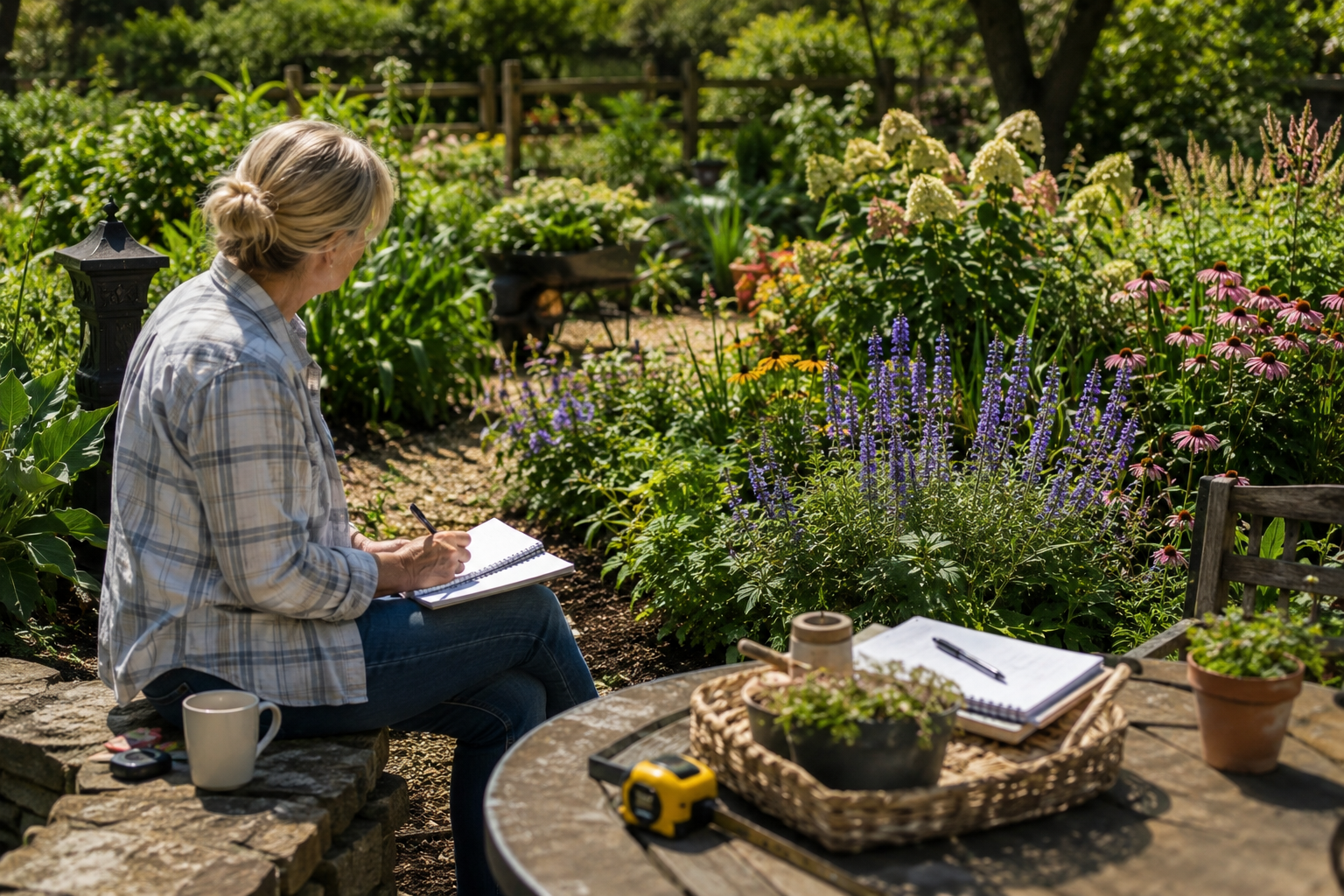
Bring photos, measurements and information about the sunlight in the area. The TLC team can help turn this season’s problem spots into a stronger plan for next year.
The Landscape Connection
4472 S. Mulford Road
Rockford, IL 61109
815-874-8733
TheLandscapeConnection.net