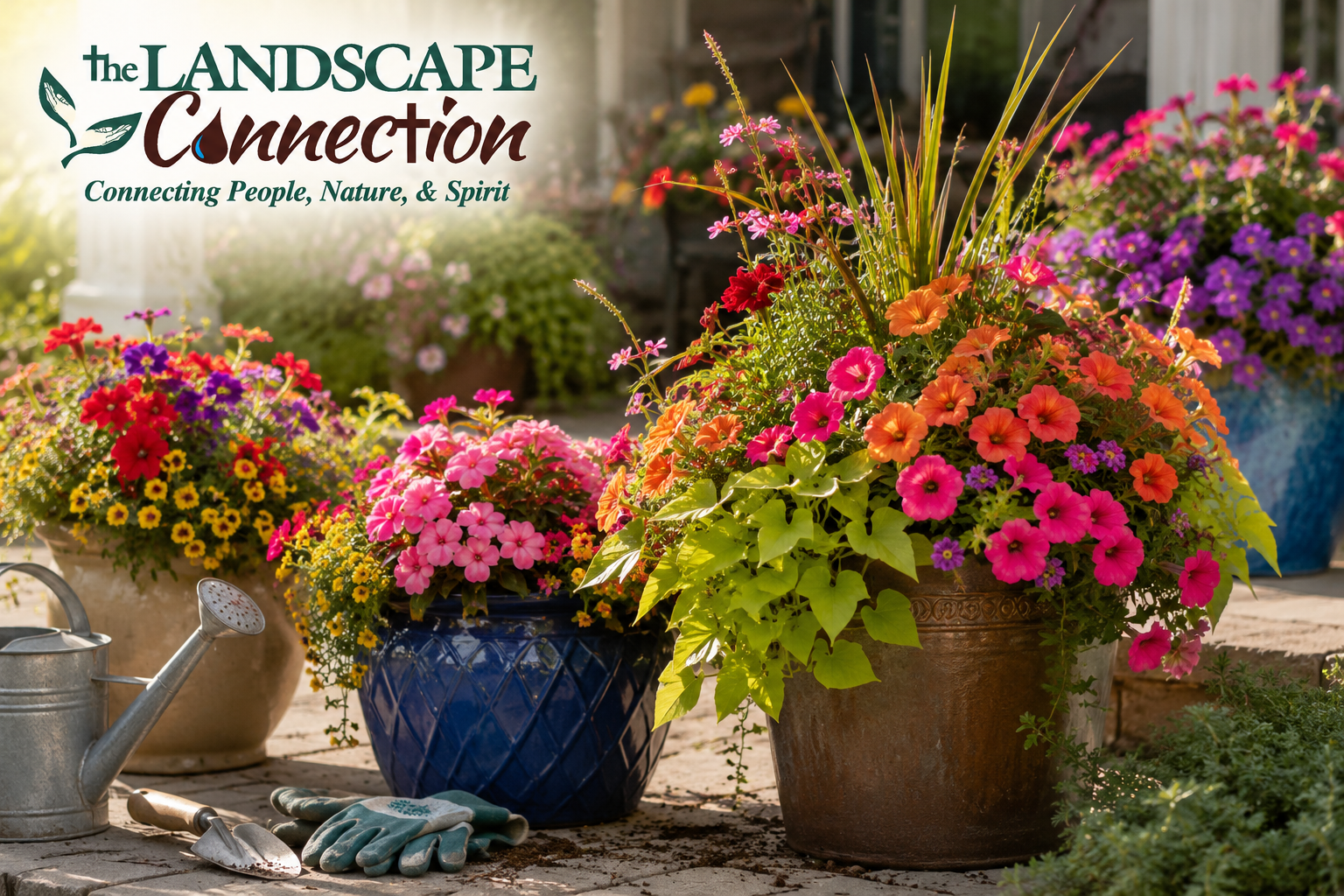
A few simple swaps can carry tired summer containers into fall with fresh color, texture and plenty of personality.
Summer containers often look their fullest in August—but by September, some plants are ready for a change.
A few annuals may still look fantastic. Others may be stretched, tired or leaving awkward gaps. That doesn’t mean the whole container needs to be emptied and started over.
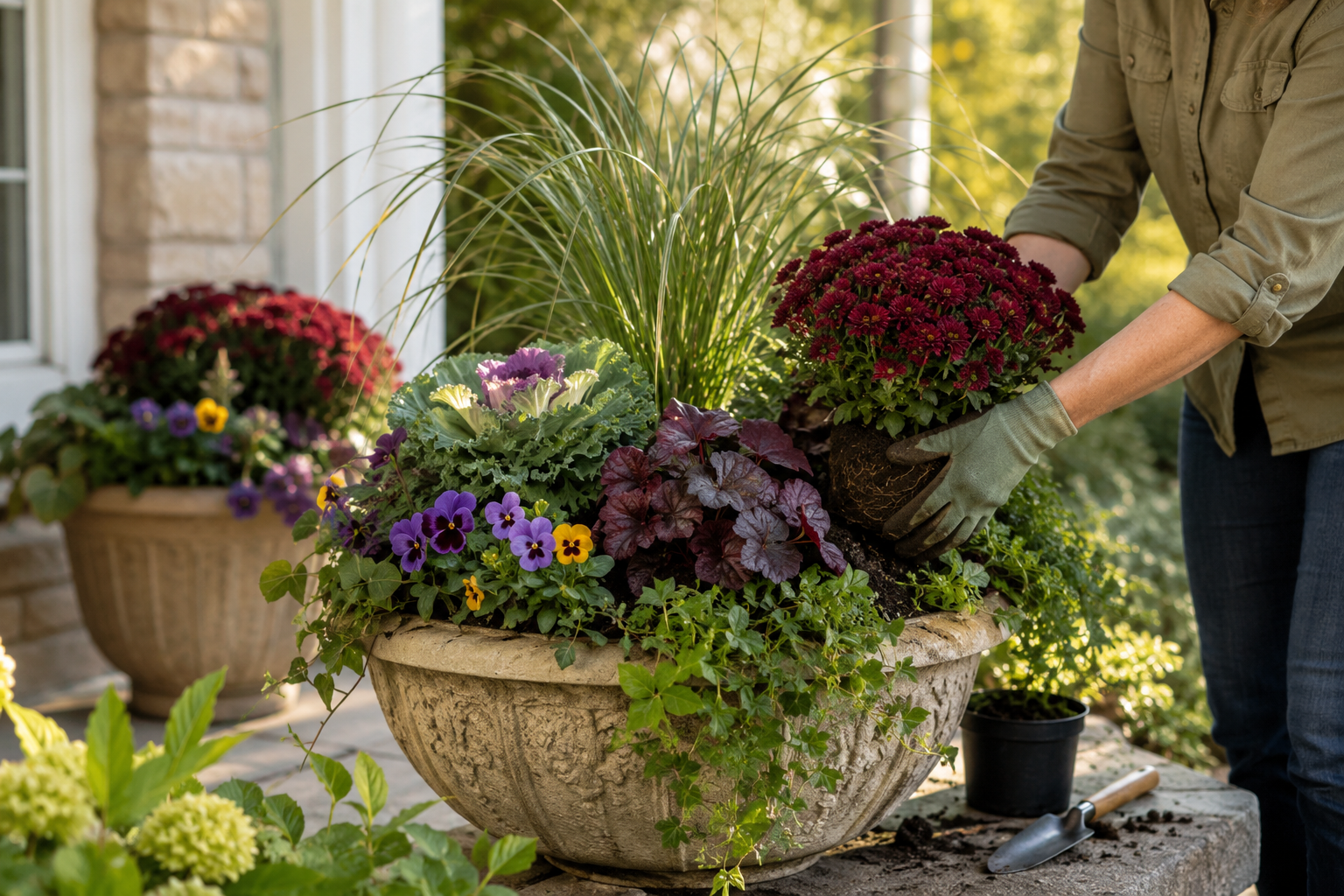
A seasonal refresh can be as simple as removing one struggling plant, trimming back another and adding a few fall favorites. Mums, pansies, ornamental kale, cabbage and grasses can bring new color and texture while extending the life of the container well into fall.
Start With What’s Already Working
Before pulling everything out, take a good look at the container.
Healthy plants that still fit the fall color palette can stay. Ornamental grasses, foliage plants, trailing vines and sturdy annuals may continue looking good until frost.
Remove plants that are:
- Brown, brittle or heavily damaged
- Bare through the center
- Overgrown and crowding everything else
- Struggling with disease or insects
- No longer adding anything to the design
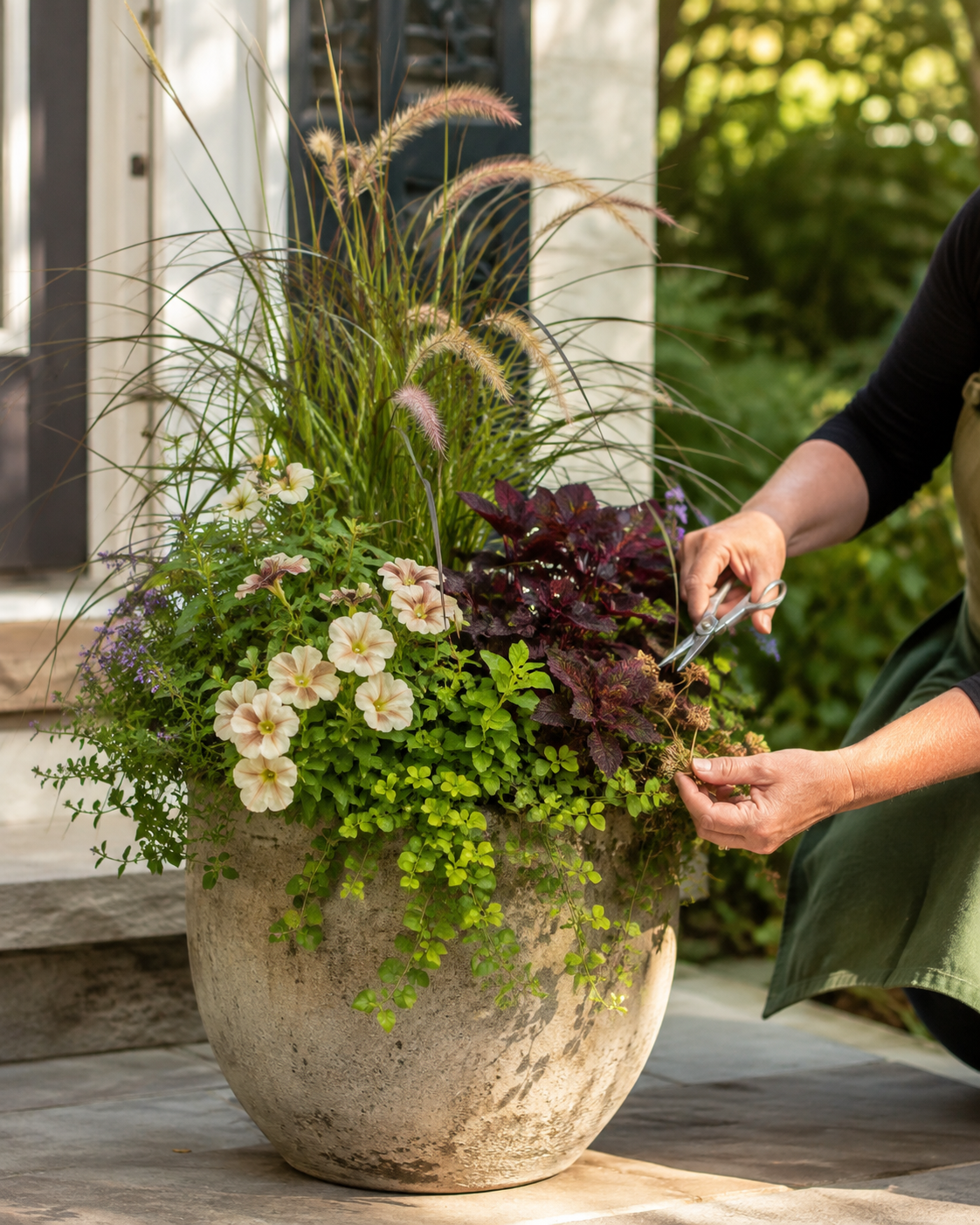
Some plants may only need a light trim. Cutting back long or tangled growth can reveal open spaces where a mum, kale or other cool-season plant can be added.
Keeping what still looks good saves time and money while making the transition feel more natural.
Choose Plants That Enjoy Cooler Weather
Fall containers don’t have to depend on mums alone. Mixing flowers, foliage and grasses creates a display with more texture and a longer season of interest.
Mums
Mums provide the boldest burst of traditional fall color. They work well as the main focal point or can be grouped with foliage plants for a fuller display.
Choose plants with plenty of unopened buds to enjoy the flowers longer. Mums in containers dry out faster than they do in the ground, so check their soil often.
Pansies
Pansies handle cool weather much better than many summer annuals. Their flowers add bright color around larger plants and help fill smaller spaces near the edge of a pot.
Ornamental Kale and Cabbage
Ornamental kale and cabbage bring bold leaves, interesting shapes and colors that often deepen as temperatures cool. They’re especially useful when a container needs texture rather than more flowers.
These plants are grown for decoration and shouldn’t be treated as edible unless they were specifically labeled and grown for that purpose.
Grasses
Ornamental grasses add movement, height and softness. Some may already be growing in the summer container and can stay right where they are.
Hardy perennial grasses may later be planted in the garden if there’s enough time for them to establish. Tender varieties can still be enjoyed as seasonal accents until freezing weather arrives.
Heuchera
Heuchera, also known as coral bells, offers colorful foliage in shades of burgundy, caramel, green and purple. Many varieties are hardy in Zone 5 and can be moved into the garden after serving as a fall container accent.
Cool-Season Vegetables
Swiss chard and ornamental varieties of kale or cabbage add rich color and texture. Their broad leaves pair especially well with finer grasses and small pansy flowers.
Use the Thriller, Filler and Spiller Idea—Loosely
Three Fall Container Recipes
These three fall container recipes combine seasonal color, bold foliage and plenty of texture. Follow them as written or use them as inspiration, swapping colors and adjusting the number of plants to fit the size of the container.
Recipe One: Rich Fall Color
- ‘Little Bunny’ fountain grass
- Hardy mum
- ‘Nagoya Rose’ ornamental kale
- ‘Apple Cider Mix’ pansies
- ‘Pink Bi-Color’ ornamental cabbage
- ‘Bright Lights’ Swiss chard
- ‘Palace Purple’ heuchera
- ‘Dinosaur’ kale
- ‘All Gold’ Hakone grass
This combination mixes deep foliage, warm flowers and several leaf shapes. The perennial grass and heuchera may also be planted in the garden afterward when conditions allow.
Recipe Two: Warm and Bright
- Autumn moor grass
- ‘Ruby Perfection’ ornamental cabbage
- ‘Yellow Blotch’ pansies
- ‘Bright Lights’ Swiss chard
- ‘Firecracker’ marigolds
- ‘Pink Bi-Color’ ornamental cabbage
Yellow pansies and warm marigolds keep some of summer’s brightness while the cabbage, chard and grass begin shifting the container toward fall.
Recipe Three: Simple and Striking
- ‘Goldcrest’ Monterey cypress
- ‘Nagoya Rose’ ornamental kale
- Dark violet pansies
- Yellow blotch pansies
- White Gigi mums
The cypress creates height while the white, yellow and violet flowers add contrast around its base. In Zone 5, ‘Goldcrest’ Monterey cypress should be treated as a seasonal accent rather than a winter-hardy outdoor evergreen.
For gardeners who prefer to see the combinations come together, Michelle demonstrates the
three fall container recipes that can be adjusted to fit different pots and color preferences.
These recipes can be scaled up or down. They can also serve as starting points rather than strict shopping lists. Swapping flower colors or using a similar plant with the same shape can create a container that better fits the home and existing fall décor.
Refresh the Soil Before Replanting
Once tired plants are removed, loosen the exposed potting mix and take out as many old roots as practical.
If the soil has become packed down or pulls away from the sides of the container, mix in some fresh potting soil. Containers need good drainage, so avoid filling drainage holes or using dense garden soil in the pot.
When adding new plants, keep the top of each root ball close to the same level as the surrounding soil. Press the soil gently into place and water thoroughly.
Keep Watering Through Fall
Cooler weather slows water loss, but fall containers still need regular attention.
Freshly planted roots can dry quickly, and mums are especially quick to wilt when their soil gets too dry. Check moisture by feeling the soil rather than assuming cool weather or light rain was enough.
As the season progresses:
- Water when the top inch of soil feels dry
- Empty saucers that hold standing water
- Protect containers during an unexpected hard freeze
- Remove spent flowers and damaged foliage
- Continue checking containers placed under covered porches
Plants tucked beneath an overhang may receive very little rain, even during wet fall weather.
Let the Container Evolve With the Season
A fall refresh doesn’t have to happen all at once.
Summer plants can remain while the weather is warm. Mums, grasses or heuchera can be added first, followed by pansies, kale and cabbage as temperatures cool. Pumpkins, branches or other natural accents can be added later without disturbing the plants.
The goal isn’t to erase summer overnight. It’s to let the container change naturally along with the season.
The Landscape Connection carries mums, fall annuals, foliage plants and seasonal accents that make it easy to refresh containers without starting from scratch. Bring photos or measurements of the pots, and the TLC team can help choose plants with the right height, color and growing needs.
Stop by and give those summer containers one more season to shine.
The Landscape Connection
4472 S. Mulford Road
Rockford, IL 61109
815-874-8733
TheLandscapeConnection.net