Flower Containers That Last All Season
A simple, proven method for building pots that stay full, healthy, and blooming from May through fall
If you’ve ever planted a container in May that looked amazing… and then faded out halfway through summer, you’re not alone.
The difference between a pot that struggles and one that thrives all season usually comes down to a few simple decisions made right at the start.
This is what actually works.
Start With Drainage. No Exceptions.
Before you even think about plants, check your pot.
If it doesn’t have drainage holes, it’s going to fail.
Most plants need water to move through the soil and off the roots. Sitting water leads to root rot, stress, and decline. Whether it’s plastic, terracotta, or ceramic—it has to drain.
Use the Right Soil (Not Garden Soil)
This is one of the biggest mistakes people make.
Garden soil is too heavy for containers. It compacts, holds too much water, and doesn’t allow roots to breathe.
What you want is a potting mix that’s:
- Light and airy
- Holds moisture but drains well
- Strong enough to anchor plants
If your soil feels dense or heavy, you can lighten it with perlite or peat moss to improve airflow and drainage.
Feed at Planting—and Keep Feeding
If you want your containers to last all season, they need consistent nutrition.
Start with a slow-release fertilizer at planting. This gives your plants an initial boost right where the roots are forming.
After that, switch to a water-soluble fertilizer every 1–2 weeks.
Plants will “use that up” quickly as they grow and bloom—so if you don’t keep feeding them, they’ll fade out early.
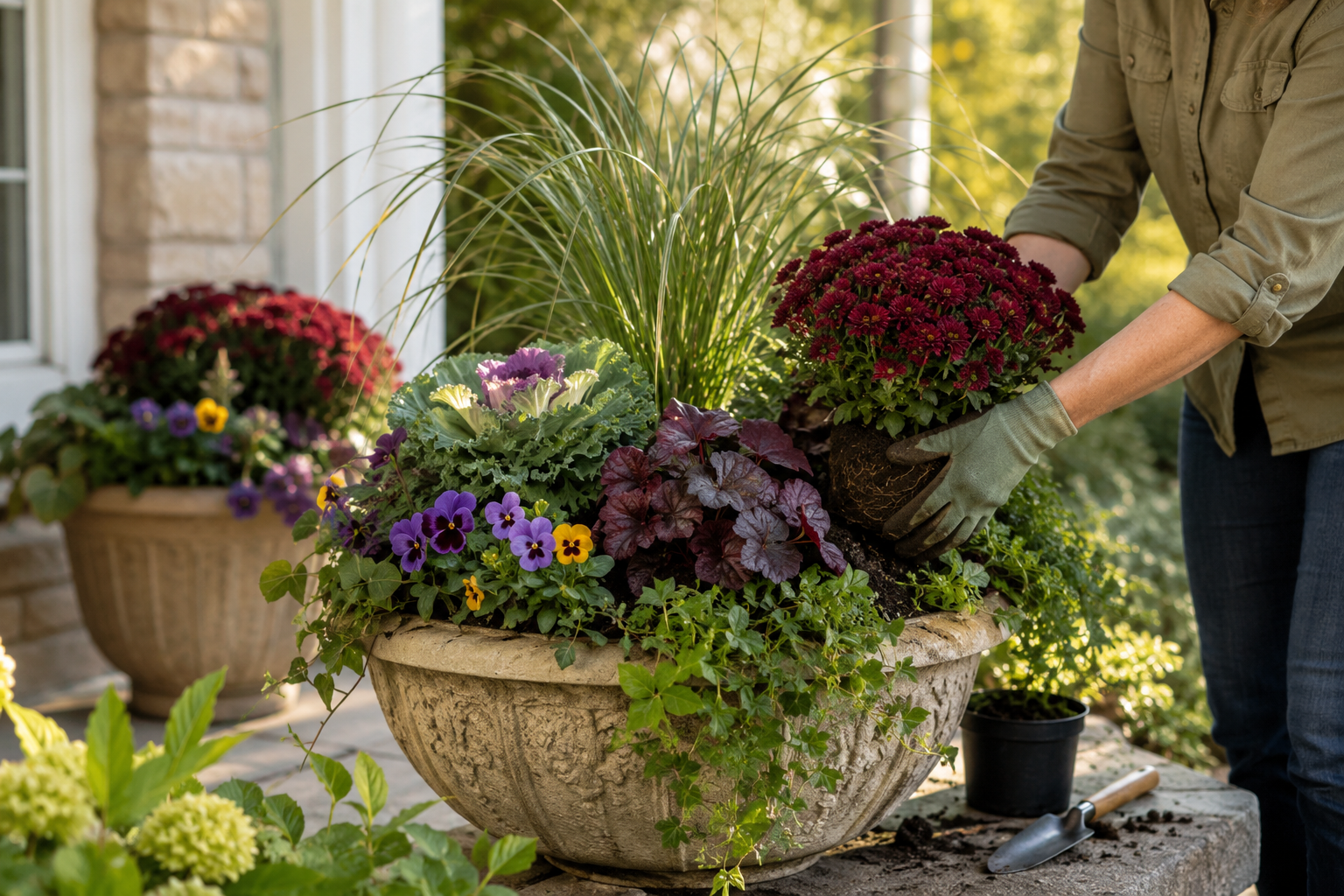
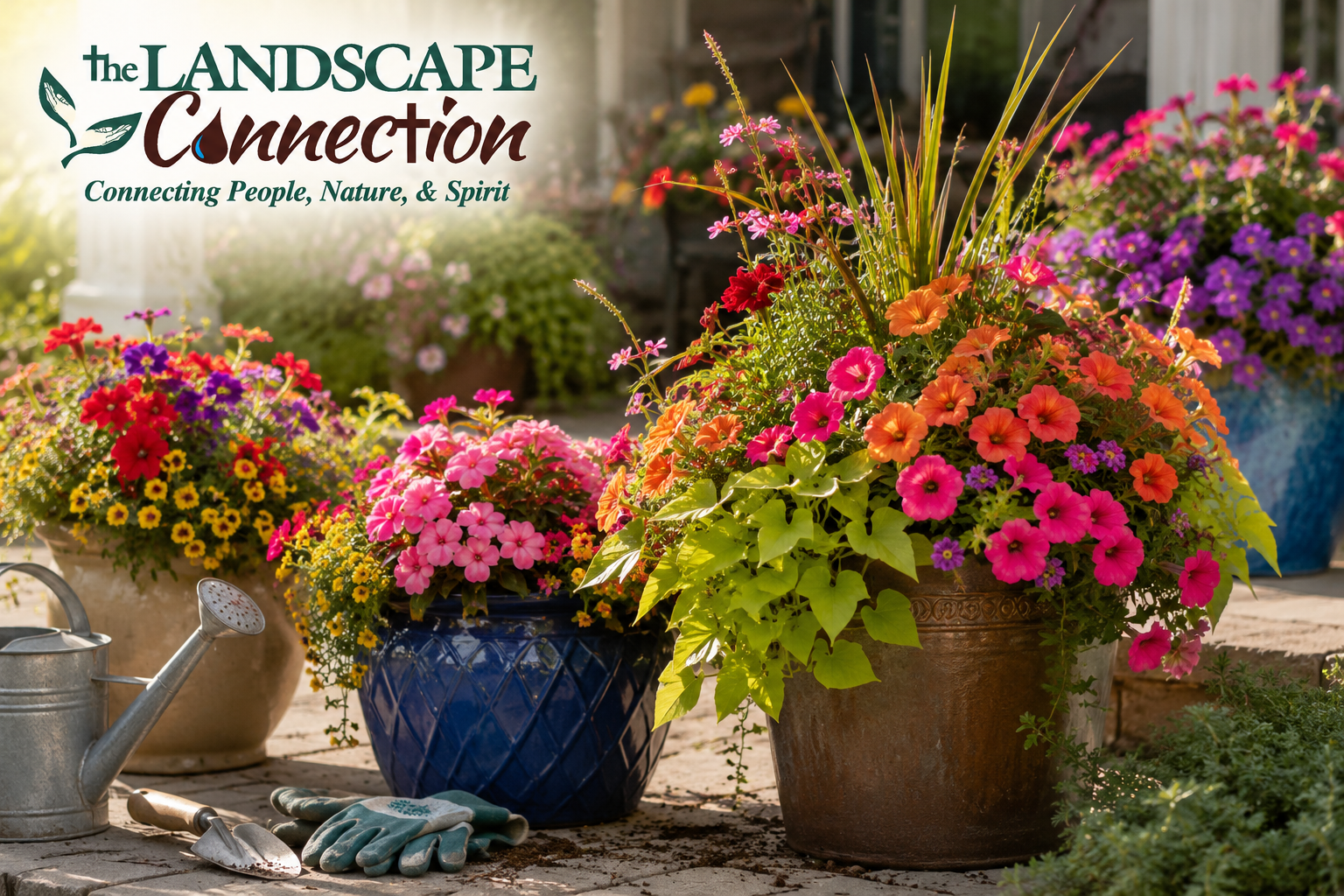
Choose Plants That Work Together
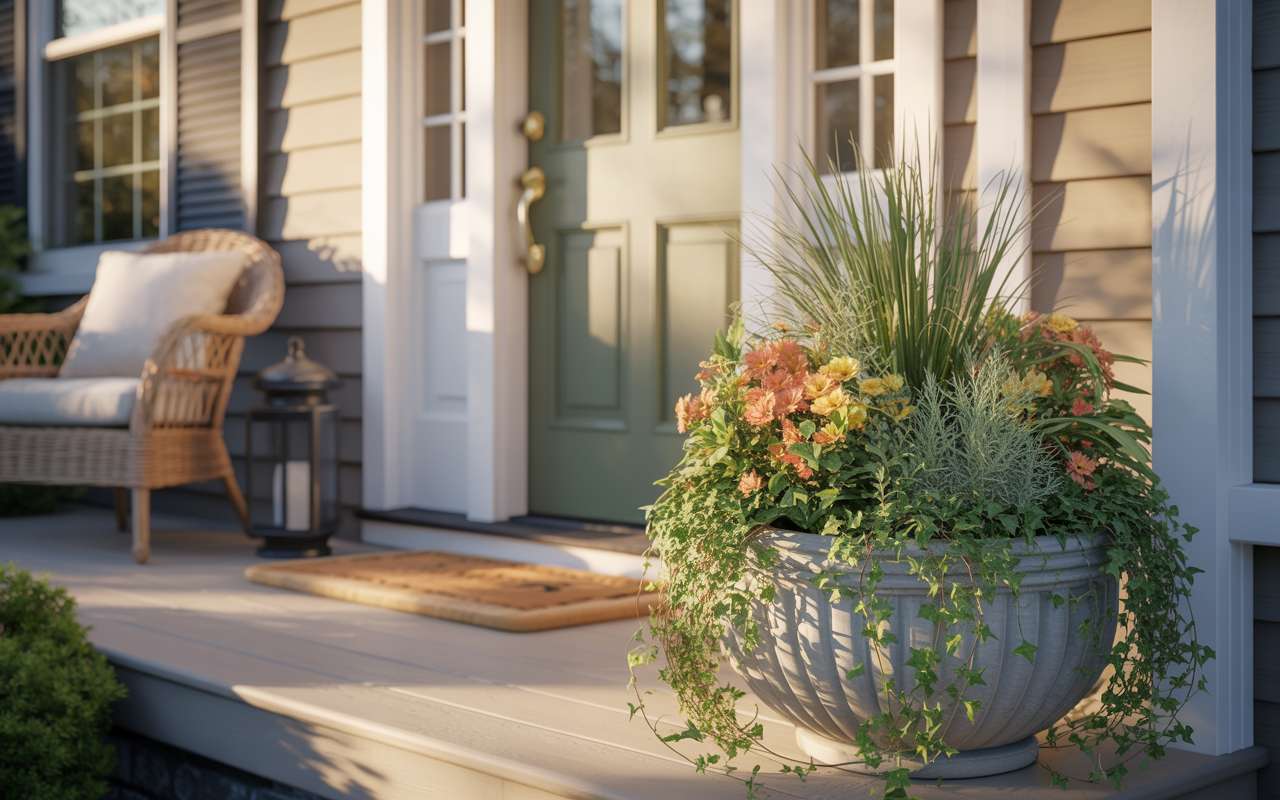
You can build a beautiful container two different ways:
Option 1: The classic design method
- Thriller: height and focal point
- Filler: body and fullness
- Spiller: movement and trailing
Option 2: The practical method
- Group plants with similar sun and water needs
Both approaches work. What doesn’t work is mixing plants that need completely different conditions.
Water the Right Way
Most container problems come back to watering.
Containers dry out fast—especially once summer heat sets in.
What works:
- Water thoroughly, not just a quick surface sprinkle
- Let water soak all the way through the pot
- Check daily in warm weather
When you first plant, take your time soaking the soil. It may take multiple passes to fully saturate dry potting mix, but that initial deep watering helps regulate moisture moving forward.
Stay Consistent
This is where most people fall off.
Containers need:
- Regular watering
- Ongoing feeding
- Occasional check-ins
The plants you choose—especially flowering annuals—are working hard all season. The more they grow and bloom, the more support they need.
Skip the maintenance, and they’ll “poop out,” as Michelle says. Stay consistent, and they’ll keep going strong.
Want to See It Step-by-Step?
If you want to actually watch this come together—including plant combinations, layout, and real-time planting—Michelle walks through it in this video: Part Shade Container Gardening Made Easy
And if you’d rather learn hands-on, we offer in-person classes where we guide you through building your own containers from start to finish. Check our Calendar of Events regularly for new seasonal classes.
The Bottom Line
There’s no guesswork here.
If your container has:
- Proper drainage
- Quality potting soil
- The right plant combinations
- Consistent water and feeding
…it’s going to perform.
Not just for a few weeks—but all season long.
If you want help choosing plants, building combinations, or just getting started, come spend some time with us.
The Landscape Connection
4472 S. Mulford Rd.
Rockford, IL 61109
815-874-8733
www.TheLandscapeConnection.net