Why Isn't My Hydrangea Blooming?
The Most Common Reasons Hydrangeas Produce Leaves Instead of Flowers—and What You Can Do About It
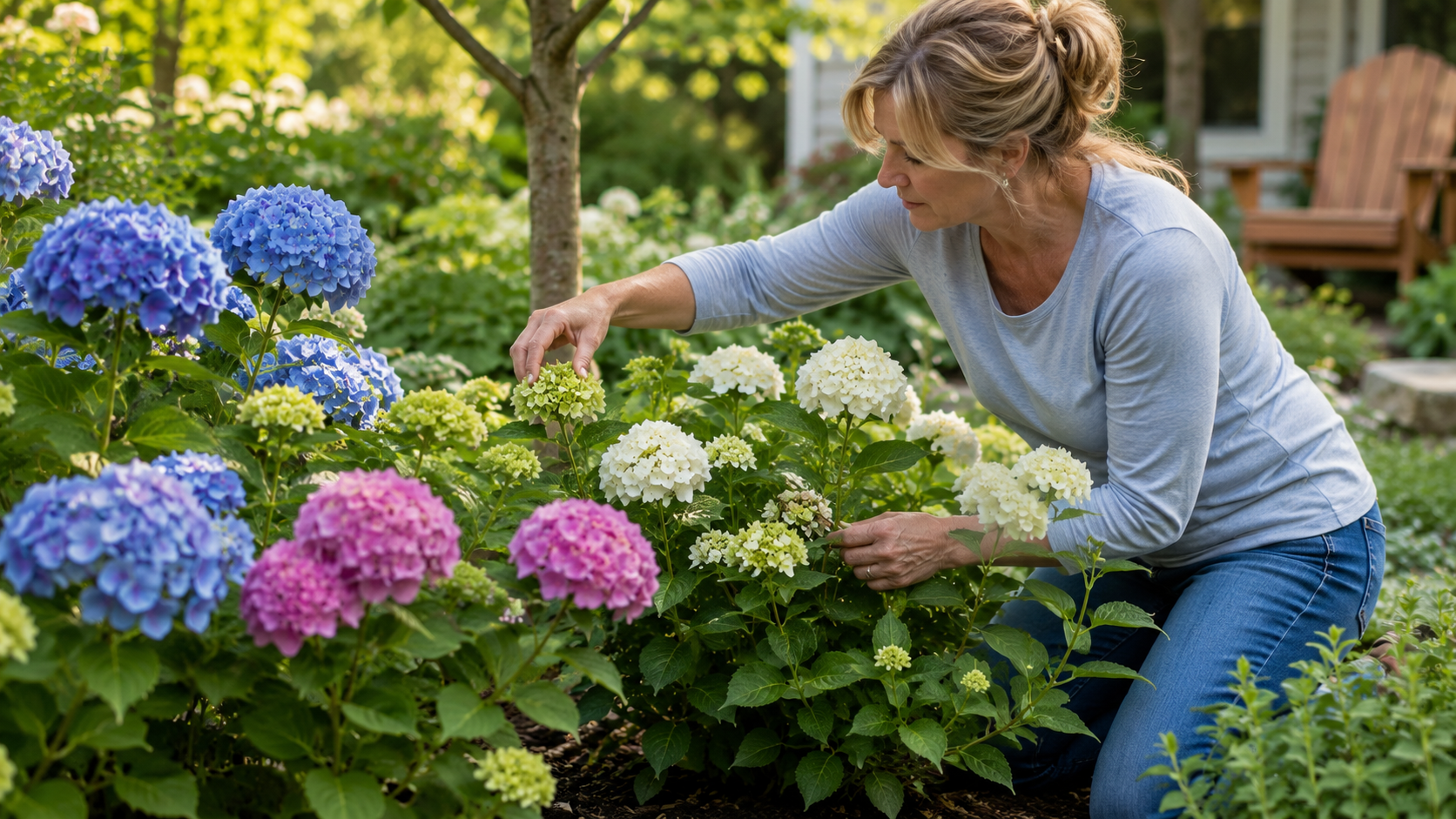
Every summer I hear the same question:
"My hydrangea looks healthy...so why doesn't it have any flowers?"
The good news is that your plant usually isn't dying. In most cases, it's one of a handful of common issues, and once you know what type of hydrangea you're growing, solving the mystery becomes much easier. Much of the confusion comes from understanding which hydrangeas bloom on old wood versus new wood.
Know Your Hydrangea Type
Not all hydrangeas grow the same way.
Smooth and Panicle hydrangeas bloom on new wood, meaning they produce flowers on the current season's growth. These are the easiest types to prune because they can be cut back in late winter or early spring without sacrificing blooms.
Bigleaf, Mountain, Oakleaf, and Climbing hydrangeas bloom on old wood. Their flower buds develop the previous year, so pruning them at the wrong time removes next year's flowers before they ever have a chance to bloom.
Old Wood vs. New Wood
This is probably the biggest reason healthy hydrangeas don't flower.
If your hydrangea blooms on old wood and you prune it in fall, winter, or spring, you're likely cutting off the flower buds. The plant will still produce beautiful leaves—but very few, if any, flowers. The Proven Winners bloom chart identifies improper pruning as one of the most common causes of bloom failure.
Winter Damage
Even if you never prune your hydrangea, Mother Nature sometimes does.
In colder climates like ours, late spring freezes or harsh winter temperatures can damage flower buds on old-wood hydrangeas before they open. The plant survives, but the blooms may not. Protecting susceptible varieties during severe cold and choosing hardy varieties for our area can help reduce the problem.
Too Much Shade
Hydrangeas are often thought of as shade plants, but most actually perform best with at least four hours of sunlight each day, especially morning sun. Too much shade can lead to lots of healthy green leaves with very few flowers. Panicle hydrangeas tolerate the most sun, while all hydrangeas appreciate evenly moist, well-drained soil.
Fertilizer Matters
If your hydrangea is getting too much nitrogen, it may put all of its energy into producing lush green foliage instead of flowers.
Choose a balanced fertilizer and avoid overfeeding. Healthy growth is important, but so is encouraging the plant to bloom.
Sometimes the Plant Just Needs Time
Newly planted hydrangeas often spend their first year or two developing strong root systems before putting much energy into flowering. If your shrub is healthy, be patient. Many hydrangeas become more reliable bloomers as they mature. The Proven Winners guide notes that younger plants often need additional time to establish before blooming heavily.
When Not to Prune
If you're unsure what type of hydrangea you have, my advice is simple:
Don't prune until you know.
It's much easier to skip pruning for a season than accidentally remove all of next year's flowers. Once you've identified your hydrangea, you'll know exactly when—and if—it should be pruned.
Hydrangeas are one of my favorite landscape shrubs because they provide incredible color, beautiful structure, and months of enjoyment. Understanding how your particular variety grows is the first step to enjoying beautiful blooms year after year.
Want to Learn More About Hydrangeas?
Hydrangeas are one of my favorite landscape shrubs, and there’s a lot more to them than most people realize. If you'd like to dive deeper, I put together a video that answers some of the questions I'm asked most often.
In Growing Hydrangeas, you'll learn:
- The five main types of hydrangeas:
- Panicle (Hydrangea paniculata)
- Smooth (Annabelle)
- Bigleaf
- Mountain
- Oakleaf
- How to identify which hydrangea you have.
- Why your hydrangea may not be blooming.
- How (and if) you can change hydrangea flower color from pink to blue.
- Tips for choosing the right hydrangea for your landscape.
🎥 Watch here:
"Growing Hydrangeas"
Whether you're choosing your first hydrangea or trying to identify one that's already in your landscape, we're always happy to help. Bring in a photo, and we'll help you determine which type you have and how to care for it so you can enjoy beautiful blooms for years to come.
The Landscape Connection
4472 S. Mulford Rd.
Rockford, IL 61109
(815) 874-8733
www.TheLandscapeConnection.net