Planting Fall Bulbs for Spring
Timing, Techniques, and Expert Pro Tips for Zone 5
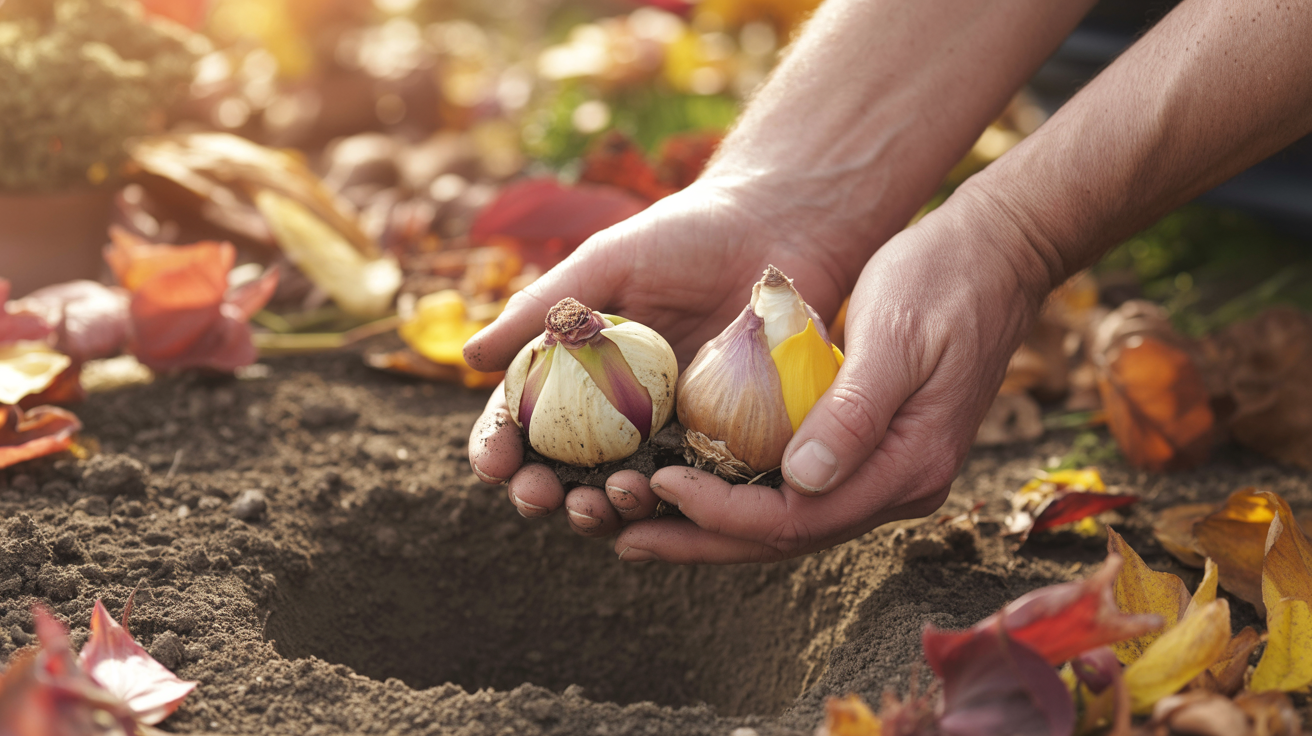
Planting bulbs in fall may feel like extra work at the end of a long season, but trust me—it’s worth it. After our long Northern Illinois winters, nothing lifts the spirit like tulips, daffodils, or crocus pushing through the soil in the spring. Here’s how to do it right in Zone 5.
- Choose healthy bulbs. Pick firm bulbs with no mushiness or odor.
- Timing is everything. Plant in late September through October when soil is 50–55°F.
- Pick the right spot. Six hours of sun helps bulbs recharge after blooming.
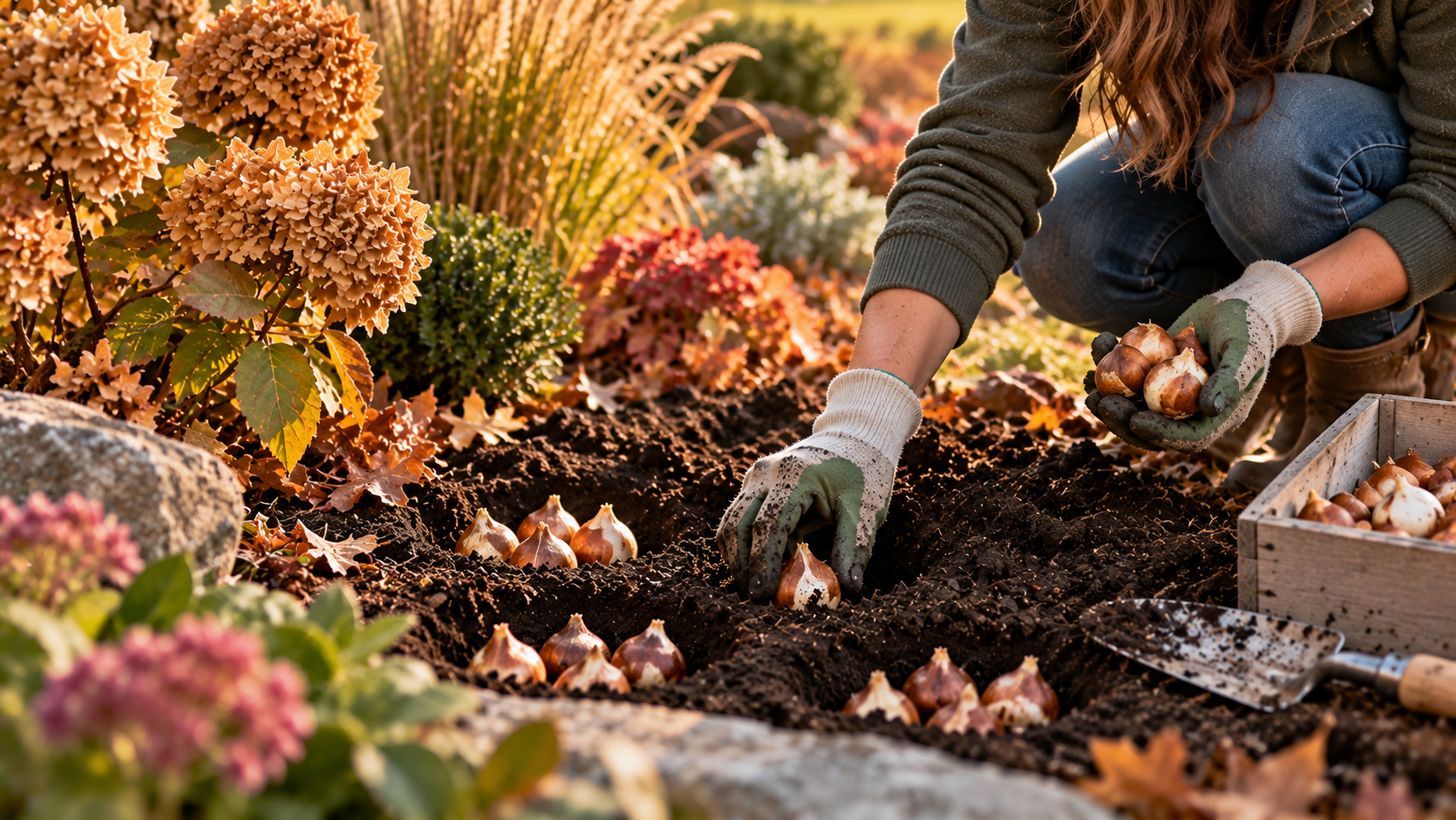
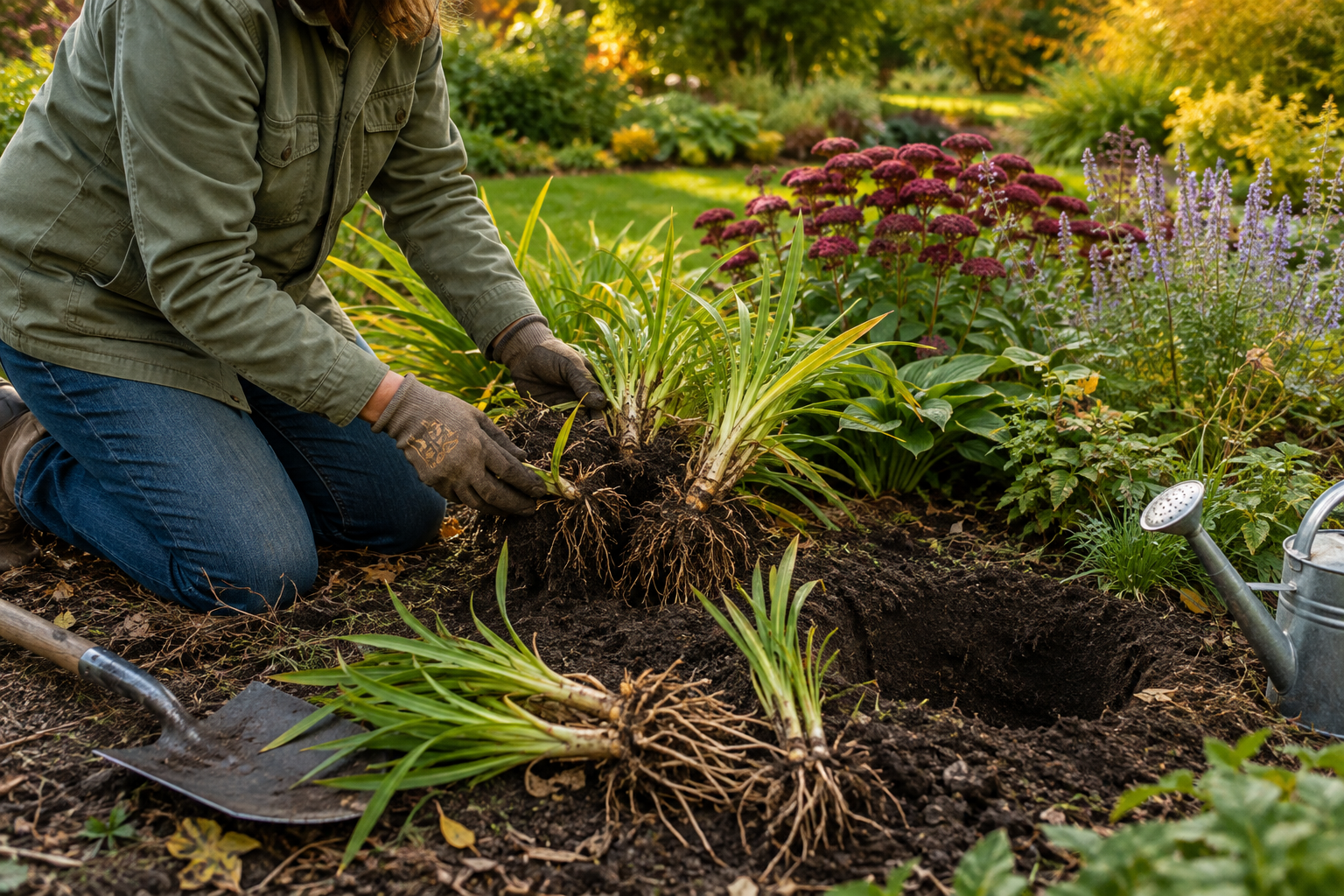
- Prep your soil. Clay-heavy soil in Rockford? Amend with compost or sand for drainage. Dig 10–12 inches deep and create a nest for roots.
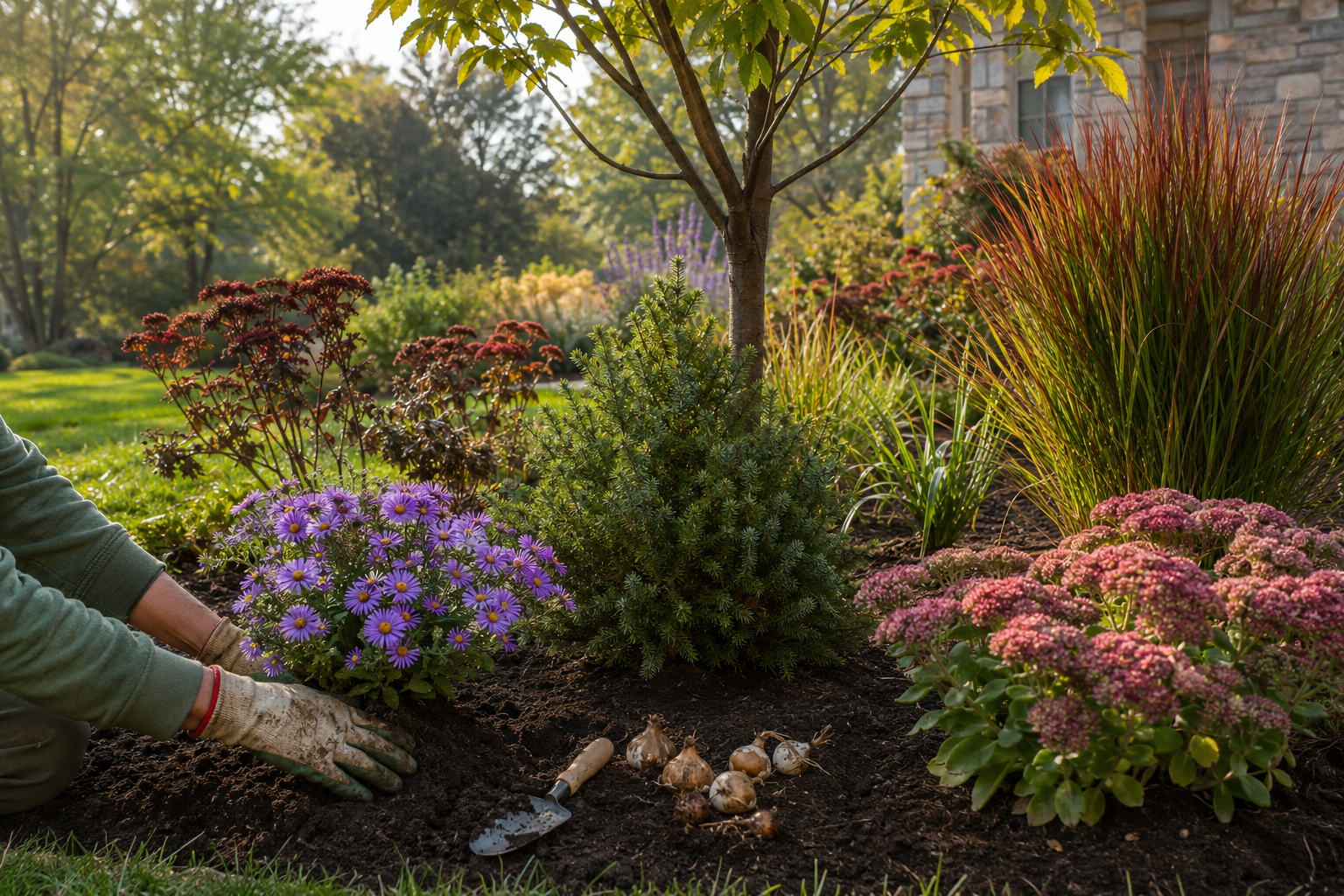
- Plant at the proper depth. Use the 2–3x rule: plant bulbs two to three times their height. Pointy side up.
- Fertilize smart. Organic bulb-tone or bulb fertilizer go in the hole; synthetic fertilizer should stay on top. Fertilize again in spring and after flowering.
- Design for impact. Plant in clumps or drifts, and layer early, mid, and late bloomers for waves of color.
- Protect from critters. Use chicken wire over tulip plantings; choose daffodils or alliums to deter squirrels.
- Mulch and mark. Add 2–3 inches of mulch for insulation, and label your plantings.
- Water in well. One deep soak helps settle bulbs and jump-start root growth.
Pro tip: Hide bulb foliage by planting them where hostas, nepeta, or other early perennials will cover the yellowing leaves in spring.
Want to see exactly how Michelle plants bulbs in her own Zone 5 garden? Watch the step-by-step video on planting fall bulbs here:
Keep the Momentum Going
Once your fall bulbs are tucked into the ground, you don’t have to stop there. Autumn is also a great time to think ahead to next year’s perennial garden.
If you’re planning for even more color, pollinator activity, and long-term garden value, take a look at our guide to perennial seeds to plant in October.
Fall planting is all about giving roots, bulbs, and seeds a head start so spring doesn’t have to begin from scratch.
Ready to plan your next round of planting? Stop by The Landscape Connection for fall bulbs, perennial seeds, and help choosing varieties that make sense for your Zone 5 garden.
The Landscape Connection
4472 S. Mulford Rd.
Rockford, IL 61109
www.TheLandscapeConnection.net