Bringing a Little Green Into Your Winter Kitchen
How to grow rosemary, thyme, parsley and chives indoors, even on Northern Illinois’ shortest days.
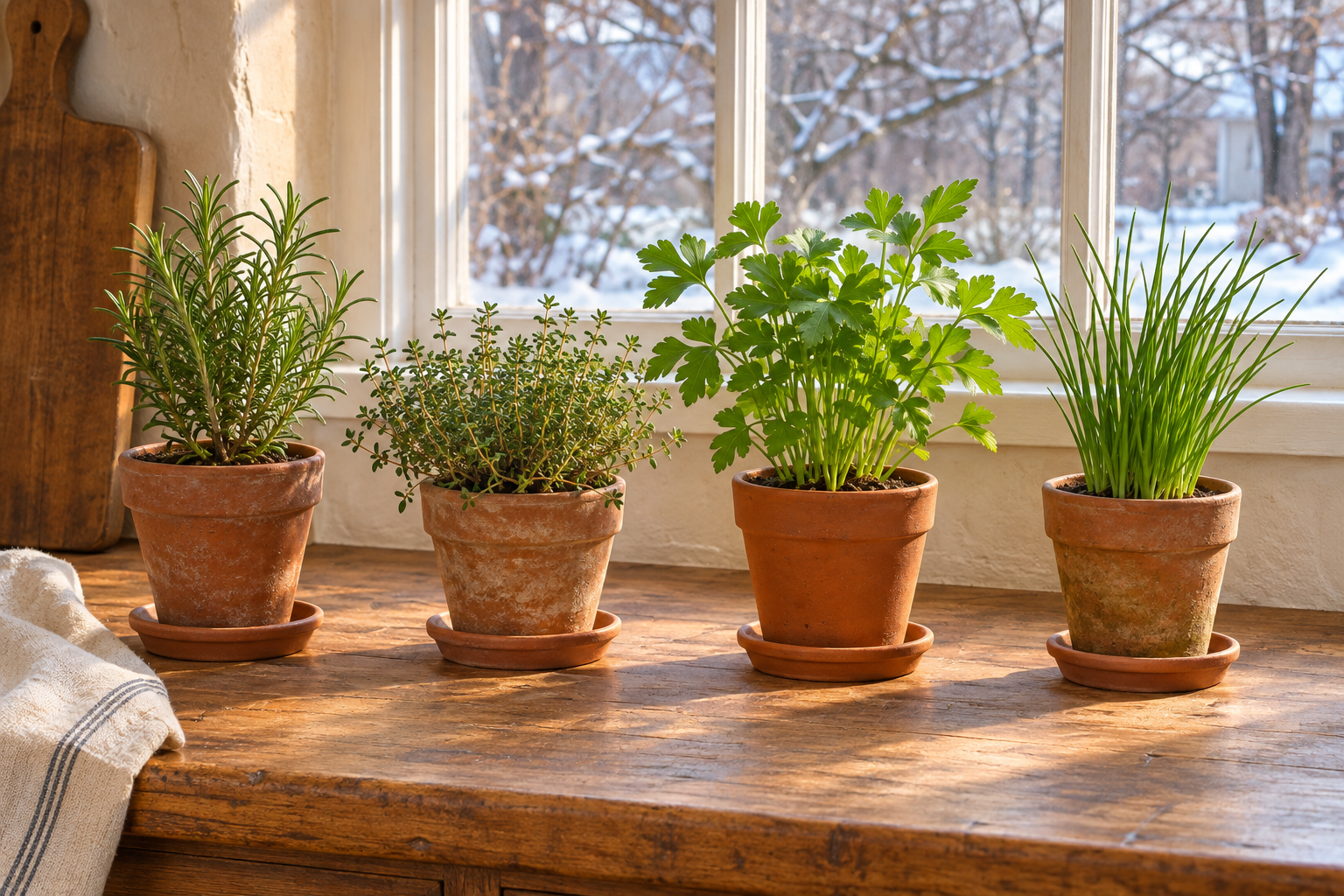
There’s something especially good about snipping fresh chives over a baked potato or adding a sprig of rosemary to a pan of vegetables while it’s snowing outside. A few pots can keep that little connection to the garden going all winter. In December, the best place to start is with the light you have and the herbs you’ll actually reach for when you cook.
Start With Your Brightest Spot
A sunny south-facing window is a good first choice. Watch it for a day before you set up your pots. A kitchen can look bright to us while the plants get very little direct sun. Keep the foliage away from cold glass and set the pots where a heating vent won’t blow on them. If the plants lean toward the window, give each pot a quarter turn every few days.
If your window gets only a few hours of sun, try a full-spectrum LED grow light on a timer for 12 to 16 hours a day. Follow the light’s directions for how far to hang it above the plants. Long, thin stems and widely spaced leaves are clues that your herbs could use more light.
Give Each Herb Its Own Pot
Start with small plants if you’d like to snip a little for dinner sooner. Give each herb a pot with drainage holes and use a lightweight potting mix. Separate pots make it easier to give rosemary a little more time between waterings while checking chives and parsley more often.
- Rosemary gets the sunniest spot or a place under the grow light. Let the surface dry between waterings, and avoid letting the whole pot dry out. Snip tender tips for roasted potatoes or chicken.
- Thyme also likes strong light and a mix that drains freely. Let the surface dry before watering again. A few sprigs go a long way in soup or roasted vegetables.
- Parsley can make do with a little less light than rosemary or thyme. Water when the surface just begins to dry, and snip a few of the outer stems for soups, salads or eggs.
- Chives are another good choice for a bright spot with a little less direct sun. Check the soil regularly and water as the surface starts to dry. Snip a few leaves for potatoes, scrambled eggs or a bowl of chili.
When a pot needs water, give it a thorough drink and let the excess drain. Empty the saucer afterward. Check each pot with your finger before watering again, especially during a string of cloudy days when the mix may dry more slowly.
Snip a Little at a Time
Herbs usually grow more slowly indoors in winter. A few sprigs for dinner give the plants time to put on fresh growth between harvests. Start with one or two herbs you cook with regularly and see how they do in your space.
Curious what a larger winter setup looks like? In this Gardening TLC video, Michelle plants herbs and lettuce together in a vertical planter for winter salads.
When you’re ready to use what you’ve grown, there’s a recipe for herb butter and more ideas in From Garden to Kitchen.
Even one pot of chives or parsley can make a winter meal feel a little fresher. If you’re wondering which herb to start with, tell us what you like to cook and what kind of light your kitchen gets. We’re happy to help you find a good fit.
The Landscape Connection
4472 S. Mulford Rd.
Rockford, IL 61109
(815) 874-8733
www.TheLandscapeConnection.net